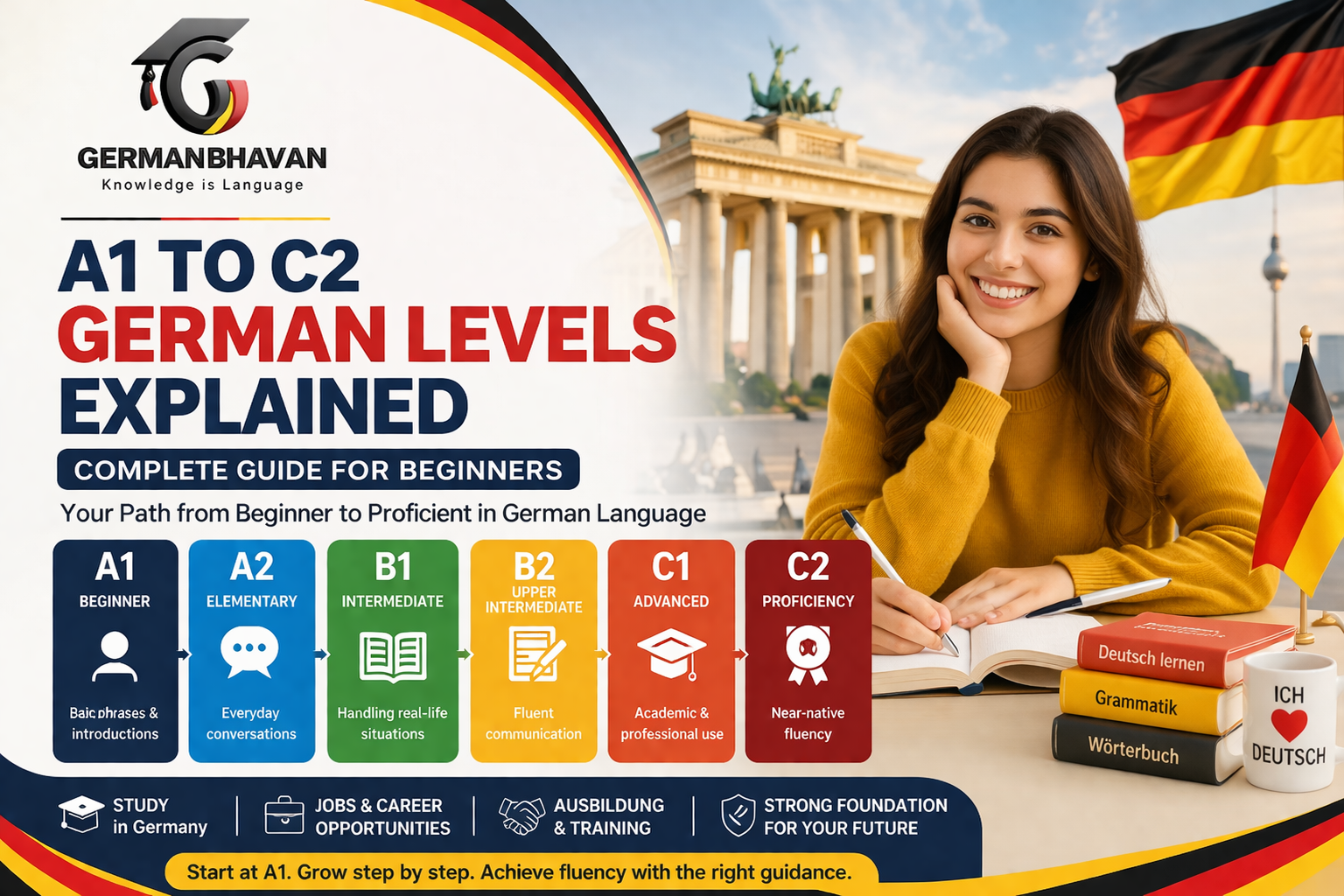
If you are planning to learn German, you’ve probably come across terms like A1, A2, B1, B2, C1, and C2. These are part of the CEFR (Common European Framework of Reference for Languages) and define your German language proficiency level.
In this complete guide, you’ll understand each level from A1 to C2 German, what skills you gain, and which level you need for study, job, or settlement in Germany.
What Are A1 to C2 German Levels?
German language levels are divided into three categories:
- Beginner Level: A1, A2
- Intermediate Level: B1, B2
- Advanced Level: C1, C2
Each level measures your ability in:
- Speaking
- Listening
- Reading
- Writing
A1 German Level (Beginner)
The German A1 level is the starting point for beginners.
What You Learn:
- Basic vocabulary and simple sentences
- Introducing yourself in German
- Asking and answering simple questions
- Understanding slow and clear speech
Best For:
- Absolute beginners
- Basic communication
- Visa requirements (family reunification)
A2 German Level (Elementary)
The German A2 level builds on basic knowledge.
What You Learn:
- Everyday conversations
- Describing routine activities
- Understanding common phrases
- Writing short paragraphs
Best For:
- Daily life communication
- Basic work environment
B1 German Level (Intermediate)
The German B1 level is a major milestone.
What You Learn:
- Handling real-life situations in Germany
- Expressing opinions
- Understanding standard conversations
- Writing simple essays
Best For:
- Applying for Ausbildung
- Living independently in Germany
- Citizenship requirements (in some cases)
B2 German Level (Upper Intermediate)
The German B2 level is required for many academic and professional goals.
What You Learn:
- Fluent conversations
- Understanding complex texts
- Professional communication
- Writing detailed content
Best For:
- Study in Germany (most universities)
- Job opportunities
- Career growth
C1 German Level (Advanced)
The German C1 level shows strong command of the language.
What You Learn:
- Understanding complex topics
- Academic and professional language
- Fluent and spontaneous communication
- Writing structured and detailed texts
Best For:
- Higher education in Germany
- Professional-level jobs
- Advanced certifications
C2 German Level (Proficiency)
The German C2 level is the highest level.
What You Learn:
- Near-native fluency
- Understanding everything you hear or read
- Expressing ideas precisely
- Advanced writing and speaking
Best For:
- Teaching German
- Research and academic careers
- High-level professional roles
German Levels Summary Table
| Level | Category | Skills | Purpose |
|---|---|---|---|
| A1 | Beginner | Basic words & sentences | Start learning German |
| A2 | Elementary | Daily communication | Basic conversation |
| B1 | Intermediate | Real-life situations | Ausbildung, living in Germany |
| B2 | Upper Inter. | Fluent communication | Study & jobs |
| C1 | Advanced | Academic/professional language | Higher education |
| C2 | Proficiency | Near-native fluency | Expert level |
Which German Level Do You Need?
- For Study in Germany: B2 or C1
- For Ausbildung: B1 or B2
- For Jobs: B2 or higher
- For Basic Communication: A1 or A2
How to Choose the Right German Level Course?
When searching for:
- German language course near me
- German A1 to C2 classes
- Best German institute
Make sure the institute:
- Offers complete A1 to C2 levels
- Has certified trainers
- Provides speaking practice
- Prepares for exams like Goethe
Final Tip
Start with German A1 level and move step by step. Don’t skip levels, as each stage builds a strong foundation for the next.
Consistency, practice, and the right institute will help you reach fluency faster.